Global trade has become increasingly complex, shaped by geopolitical tensions, regulatory shifts, and economic uncertainty. These disruptions have exposed weaknesses in supply chains and forced organizations to rethink procurement. What was once an operational task is now a strategic function—driven largely by Supplier Relationship Management (SRM).
What Is Supplier Relationship Management (SRM)?
Supplier Relationship Management (SRM) is a strategic approach to managing supplier interactions to maximize value, reduce risk, and foster long-term collaboration. Unlike traditional vendor management, which focuses on cost and compliance, SRM emphasizes partnership, transparency, and shared growth.
An effective SRM strategy integrates procurement planning, performance tracking, communication, and risk assessment into a unified system. It treats suppliers as key contributors rather than transactional vendors.
Key benefits of SRM include:
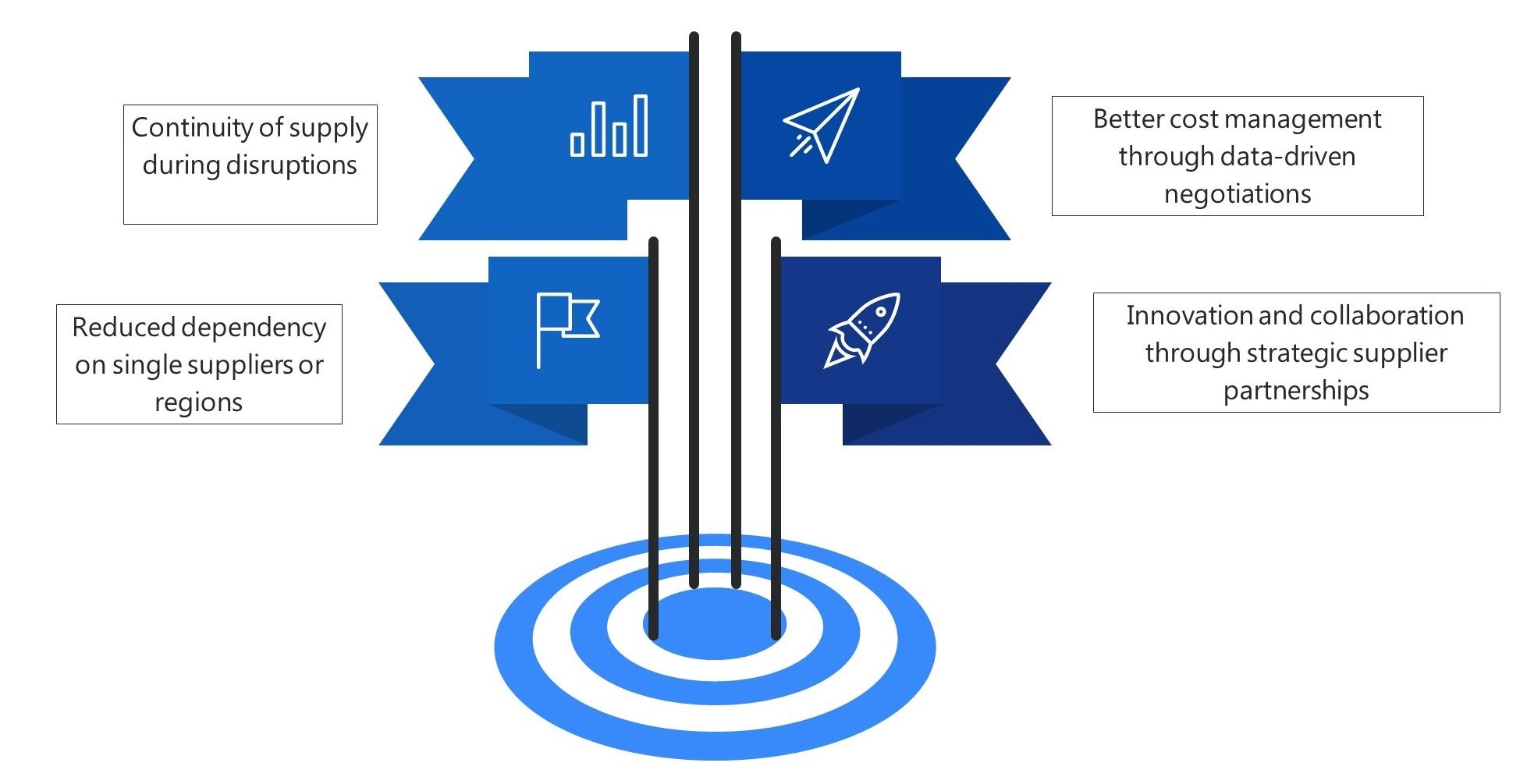
- Stronger supply chain stability
- Improved supplier performance
- Greater innovation and collaboration
- Reduced dependency risks
- Cost efficiency without compromising quality
In today’s uncertain environment, SRM enables businesses to remain agile and maintain continuity.
Why SRM Matters Today
Recent global events have shown how vulnerable supply chains can be when overly dependent on specific suppliers or regions. Trade restrictions, tariffs, and export bans can disrupt industries almost instantly.
Companies relying on single-source suppliers often face delays, rising costs, and reputational risks. This highlights a critical lesson: overdependence increases vulnerability. Strong supplier relationships are essential for resilience.
Building Supply Chain Resilience with SRM
To move from reactive responses to proactive planning, businesses must embed resilience into procurement strategies. SRM supports this through:
- Supplier Diversification
Relying on multiple suppliers across regions reduces the risk of disruption and ensures continuity. - Continuous Risk Monitoring
Supply chain risks evolve constantly. Monitoring political, environmental, and financial factors helps anticipate issues early. - Strategic Partnerships
Collaborative supplier relationships improve trust and flexibility. In times of disruption, strong partnerships often lead to priority support. - Data-Driven Decisions
Analytics help identify risks, forecast demand, and evaluate supplier performance, enabling smarter sourcing decisions.
SRM and Vendor Management
Vendor management focuses on operational aspects such as contract compliance, performance tracking, and issue resolution. When integrated with SRM, it supports broader strategic goals rather than functioning as a standalone process.
How UnivDatos Supports SRM
UnivDatos helps organizations strengthen SRM through practical, data-driven procurement solutions:
- Supplier Assessment: Evaluating capabilities, risks, and compliance
- Risk Forecasting: Identifying potential disruptions and planning contingencies
- Supplier Diversification: Sourcing and qualifying alternative vendors
- Performance Optimization: Designing metrics aligned with business goals
- Ongoing Support: Continuous monitoring and strategy refinement
With deep industry expertise, UnivDatos enables businesses to build resilient and proactive procurement systems.
The Future of Procurement
Supply chain disruptions are no longer rare—they are ongoing challenges. Organizations that prioritize SRM are better equipped to adapt, innovate, and grow.
By combining supplier collaboration, risk management, and data insights, SRM transforms procurement into a strategic advantage. It not only reduces risk but also drives long-term value, agility, and sustainability.
With the right SRM strategy, businesses can turn uncertainty into opportunity and secure a stronger competitive position.
Constructing the Supply Chain Future
Trade bans are not exceptions anymore; they are the norm in the global marketplace. The takeaway is clear: survivor companies don't wait for the next disruption, they prepare for it.
With UnivDatos as your procurement partner, Supplier Relationship Management is more than risk control, it's a strategic advantage. Contact UnivDatos today to learn how our procurement management services can support your brand goals. Call us at +1 978 733 0253, email contact@univdatos.com, or fill out our contact form to schedule a consultation.
FAQs
- What is Supplier Relationship Management (SRM)?
Supplier Relationship Management (SRM) is a strategic approach to managing supplier relationships to improve performance, reduce risks, and create long-term business value. - How is SRM different from vendor management?
Vendor management focuses on operational tasks like contract compliance and performance tracking, while SRM emphasizes strategic partnerships, collaboration, and long-term growth. - Why is SRM important for modern businesses?
SRM helps organizations manage supply chain risks, ensure continuity, enhance supplier performance, and respond effectively to global disruptions. - How does SRM improve supply chain resilience?
SRM strengthens resilience by diversifying suppliers, enabling continuous risk monitoring, fostering collaboration, and supporting data-driven decision-making. - What are the key benefits of implementing SRM?
Key benefits include improved cost efficiency, stronger supplier relationships, enhanced transparency, reduced dependency risks, and increased operational agility.

 English
 Arabic
 French
 Spanish
 Portuguese
 Turkish
 Dutch
Dutch
 Italiano
 Russian
 Romaian
 Portuguese (Brazil)
 Greek
Greek