
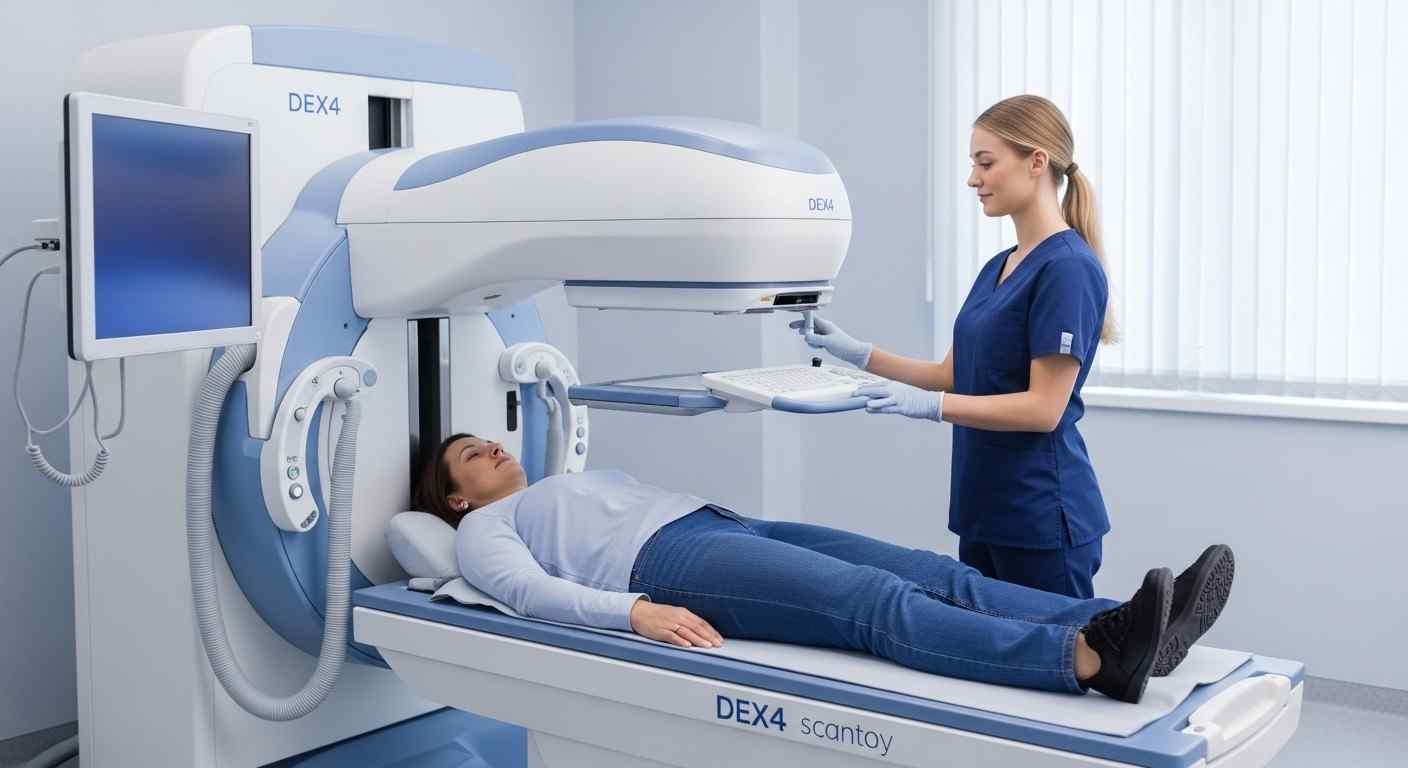
Osteoporosis is a disorder that causes bones to lose their strength making them weak and prone to fracturing. The key issue with it is that the loss of bones is frequently not marked with its manifestations, which are quite unnoticeable. Nobody is aware that something is amiss until the time when one fractures due to a simple slip or daily activity. It is critical to know the osteoporosis’s early signs to evaluate and prevent it on time. Such imaging techniques as a bone density scan, or DEXA, are useful in diagnosing bone loss before severe problems occur.
Why is Osteoporosis a Silent Disease in its Early Stages?
Osteoporosis is a disease that is well described as a silent disease since the loss of bone occurs slowly and painlessly at the onset. The weakening of the bones does not hurt them thus the individuals normally feel normal over years. Everyday life works and the internal processes occurring in the skeletal system remain unknown to us. Symptoms may have taken time before showing up and by now one may have lost a lot of bone density. This is the reason why the importance of early screening is relevant and a DEXA scan should be used, particularly in persons who are known to have risk factors.
What are the Symptoms that could be subtle before bone fractures take place?
Though the osteoporosis early signs hardly has any apparent symptoms, there can be some subtle ones, including:
- Slow height loss with time.
- Stooped or a little rounded pose.
- Weaker grip strength
- More balance problems or minor falls.
They are usually confused with normal aging. These changes can be monitored to ensure that earlier analysis is done by scanning the bone density.
What is the Mechanism of Bone Loss Preceding the Onset of Sensible Pain or Damage?
The loss of bone typically begins a long time before pain or a fracture is experienced. It grows without causing any visible internal changes like:
- Increased age or hormonal changes result in reduced bone mineral density.
- Reduced rate of bone regeneration relative to bone breakdown.
- Bone deficiency due to nutritional deficiency.
Diagnostic imaging such as DEXA is often the sole method to identify the early-stage bone loss due to the absence of the immediate discomfort.
Who Will be More Prone to Early Osteoporosis?
Some of them are more likely to develop osteoporosis at earlier age. The risk factors are aging particularly after menopause, family history of osteoporosis, low body weight, and prolonged use of some specific medications such as steroids. There are lifestyle factors that include low levels of calcium intake, deficiency of vitamin D, smoking and physical inactivity. Individuals who possess such risk factors enjoy the most of the early screening in order to determine the osteoporosis early signs before they break bones.
Conclusion
Osteoporosis usually develops with no symptoms thus early diagnosis is difficult but very critical. Minor alterations in posture, height or balance can be initial indicators but they are simple to ignore. A bone density test performed by DEXA technology is an excellent method of notifying bone loss prior to severe damage occurring.
Through ViaScan, people are able to gain knowledge about their bone health in an easy and assured manner through the use of the advanced diagnostic imaging services. Early awareness enables to make informed health choices and long-term mobility and independence- without having to wait until a fracture becomes an indicator of a problem.
References:

 English
 Arabic
 French
 Spanish
 Portuguese
 Turkish
 Dutch
Dutch
 Italiano
 Russian
 Romaian
 Portuguese (Brazil)
 Greek
Greek